
Art and Creative Classes for Kids in Lisbon

kidstogo

Few things are as useful to a child as the freedom to make something. Drawing without rules, mixing paint with their hands, turning a cardboard box into a spaceship. Art is a language children use to work out the world before they have the words for it.
Lisbon has a genuinely good offering here, but it is unusually hard to research. Museum programmes change season by season, small studios open and close quietly, and a lot of what is written about them online describes places that are no longer there. This guide sticks to what could be verified in August 2026, and is explicit about where you have to go and check for yourself.
What art classes actually do
Art is often sold to parents with a list of cognitive benefits. The honest version is simpler and holds up better.
It builds fine motor control. Cutting, holding a brush, rolling and pinching clay — these are the same movements that make handwriting possible.
It gives a low-stakes way to be wrong. In art there is no correct answer, which makes it one of the few activities where a child who is anxious about getting things right can practise not getting things right.
It produces something. "I made this" is a specific kind of confidence, and it is rarer than it should be in a child's week.
It slows children down. Clay in particular tends to produce a kind of concentration that is hard to get any other way.
That is enough. You do not need a claim about IQ to justify letting a child paint.
The types of class on offer
Visual arts — drawing, painting and sculpture, working through pencil, charcoal, watercolour, acrylic and clay. The classic foundation, and the right default.
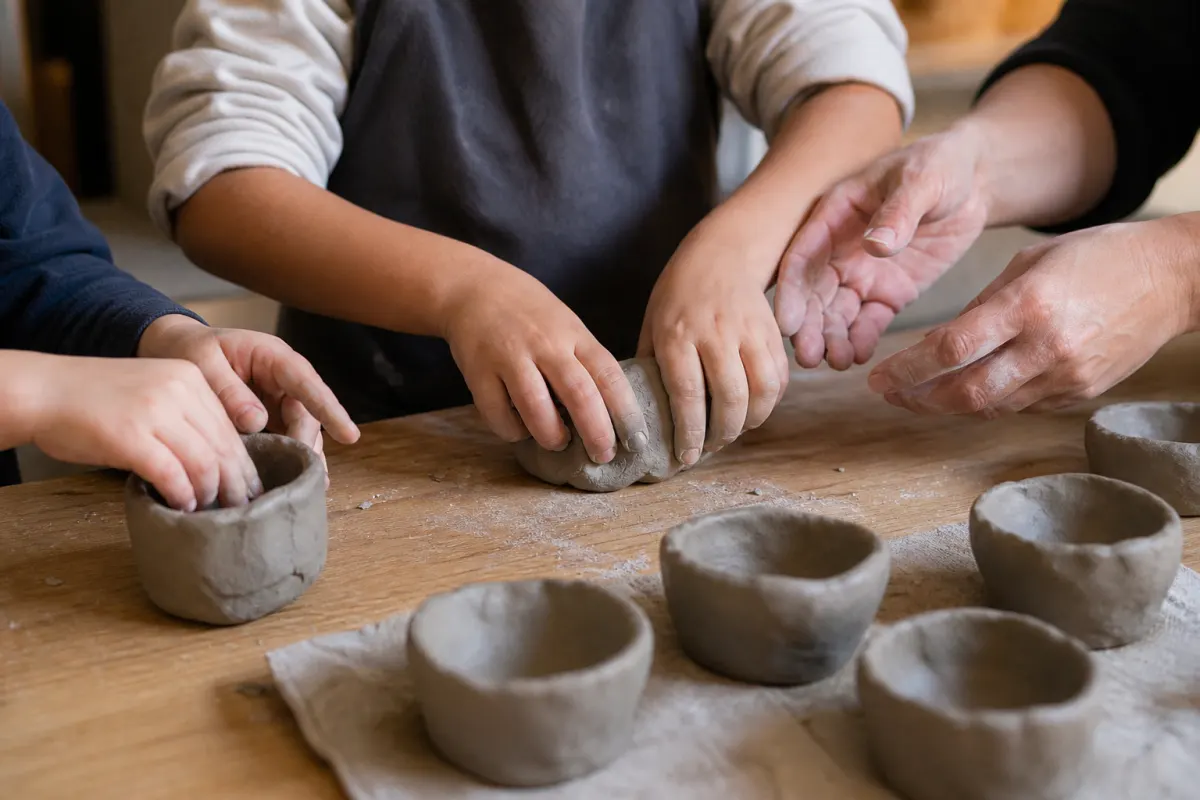
Ceramics — one of the most popular children's activities in Lisbon in recent years, and the most tactile. The child takes home an object, which matters more to them than any technique.
Mixed media — collage, printmaking, textiles and recycled materials in the same session. Good for children who lose interest in a single technique.
Illustration and comics — for older children who want to tell stories, covering composition, character and visual narrative.
Photography and digital art — generally from around 9 or 10, and the natural route for a child whose creativity is already happening on a screen.
Where to actually go
Be aware that this is the part of any art guide that rots fastest. Small private studios are the most volatile category in this whole sector, and several places that appear in older listings — including a much-cited "Museu da Criança" — no longer have any live presence at all. Treat any studio name you read, here or elsewhere, as something to confirm before you travel.
The institutions are the stable end:
Fábrica das Artes at the CCB (Belém) is the most substantial family programme in the city. It runs on two strands — performances and workshops — and is explicitly aimed at a range of audiences including children, schools and families. Worth knowing that it is centred on the performing arts and their crossovers, rather than being a straightforward painting-and-drawing studio, so check what a given session actually involves before booking a child expecting an easel.
MAAT (Belém) runs a public programme that includes family and accessible sessions. Its offer changes with the exhibitions, so check the current programme rather than assuming a standing children's workshop.
The Gulbenkian runs its visits-and-activities programme, Descobrir, alongside a garden that is one of the best free spaces in the city. Sessions for a given period appear on their site a few weeks ahead rather than as a fixed timetable, so check close to when you want to go.
Pavilhão do Conhecimento (Parque das Nações) sits where science meets making, which suits children who want to build things rather than draw them. It also runs school-holiday programmes.
Your junta de freguesia and local library. The least glamorous and most reliably affordable option in the city. Parish councils and BLX branches run children's workshops, often free, and they are the first place to look if budget is the constraint — not the last.
For teenagers specifically, note that some well-known Lisbon ateliers are adult fine-art or photography schools with a separate youth strand rather than children's studios. Atelier de Lisboa, for instance, is a photography and fine-art school whose Atelier Jovem programme is aimed at ages 12 to 18 — excellent for a committed teenager, wrong for a seven-year-old.
What suits each age
Ages 2 to 5 — process, not product. The output is not the point and will not look like anything. Look for short sessions of 30 to 45 minutes, non-toxic materials, minimal directed instruction, and staff used to this age. A parent staying in the room is often an option and sometimes a necessity. Expect finger painting, playdough and clay, collage, and stamping. Send them in clothes you have stopped caring about.
Ages 6 to 10 — technique arrives. Around six, children start wanting their work to look like the thing it is meant to be, and get frustrated when it doesn't. This is the age for gentle technique: observational drawing, watercolour, hand-built ceramics, printmaking, and projects that have a beginning and an end. Sessions of about an hour.
If your child announces they "can't draw", a good studio treats that as the actual curriculum. Drawing is a trained skill, not a trait, and watching that belief change is the best thing these classes do.
Ages 11 and up — depth. Pre-teens want a real challenge and a personal direction: illustration, comics, photography and editing, sculpture, larger-format painting, and for some, the beginnings of a portfolio. Sessions of 60 to 90 minutes, with individual feedback and some exposure to actual artists and movements.
The first few classes
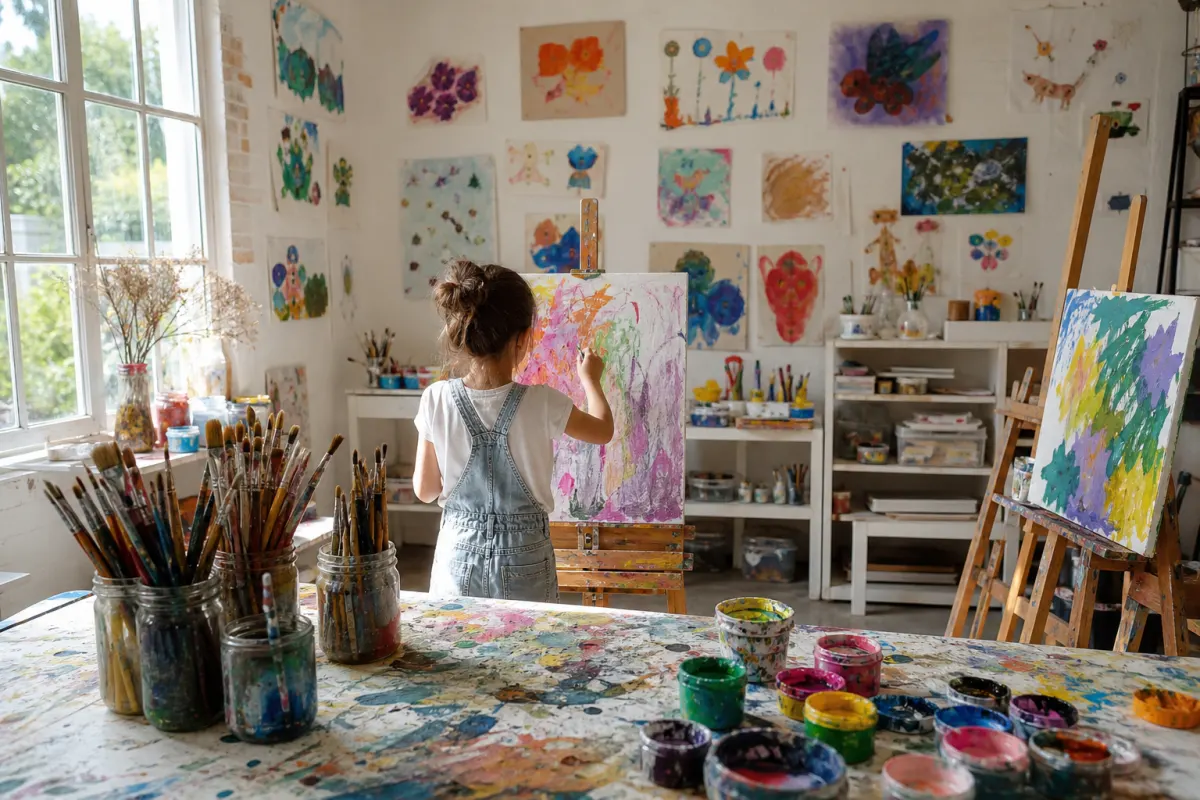
Before you enrol, take the trial class most studios offer, and use it to look at the room as much as the lesson. A studio that displays children's work on its walls is telling you it values what the children make. Ask the teacher about their approach — you are listening for a balance between guidance and freedom, not a house style every child's work conforms to.
In the first session, expect some children to watch rather than join. That is normal and should not be pushed. Do not expect anything worth framing.
Over the first month, most children need three or four sessions to settle into the group and the rhythm. Progress is not linear. Ask what they did and how it felt rather than asking to see the result — the question you ask shapes what they think the class is for.
What it costs, and what drives it
Studio fees vary widely across the city and published price lists go stale quickly, so rather than quote figures, here is what determines them:
- Group size, the largest single factor. A private session costs several times a place in a group of eight.
- Sessions per week and session length.
- Whether materials are included. Most studios include basics — paint, brushes, paper, clay — in the monthly fee. The extras that get billed separately are the expensive ones: large canvases and, especially, kiln-firing for ceramics.
- Enrolment or annual registration fees, charged once and easy to miss when comparing monthly prices.
- End-of-year exhibitions, which occasionally carry their own cost.
Ask for the full first-year cost including all of it. Then ask about sibling discounts and termly rather than monthly payment — both are common and rarely advertised.
On free options: parish councils and municipal libraries run genuinely free workshops, and they are the real budget answer. Be careful with the older advice about free museum Sundays, though — the arrangement that gave free entry to state museums and monuments on Sunday mornings ended in 2024 and was replaced by the Acesso 52 scheme, so check current terms rather than planning around a free morning that may no longer exist.
Holiday workshops and creative camps
Beyond weekly classes, the school breaks are when the art offer expands:
- Art day camps running a full week, usually school hours, with varied activities across the week.
- Museum holiday programmes, which the larger institutions run during school breaks.
- Intensive ceramics workshops, a few days long, for children who want to go deeper.
- One-off weekend and seasonal workshops, including family sessions where parents and children make something together.
These fill up early — summer places often open in spring. Our school holidays calendar has the dates to plan against, and the Easter activities guide covers what to book when.
Find art classes on KidsToGo
On KidsToGo you can browse art activities for children in Lisbon by age, area and schedule.
For where art fits alongside everything else, see our activity guide by age. And if what your child actually wants is a stage rather than an easel, what to do with kids this weekend in Lisbon is a good place to start looking.
Art teaches something few other subjects do: that there is no right answer, that the process counts as much as the result, and that everyone sees it differently.
Last reviewed: August 2026. Every venue named here was fact-checked against its own live site, and one frequently listed venue was removed after its domain was found to be inactive. Prices are deliberately not quoted — studio fees vary widely and change often, so ask for the full first-year cost.
Published on KidsToGo — the platform that helps families discover the best activities for children in Portugal.

kidstogo
KidsToGo is the leading platform for discovering kids activities in Portugal. We help families find the best experiences — from creative workshops and sports to outdoor adventures — so every child can learn, play, and grow.